
Category: My work

  • Mortgage rates just fell below a crucial psychological threshold

    Mortgage rates just fell below a crucial psychological threshold

    The difference from a 6 percent rate is tiny, but the appeal to customers is big.

    Originally published at washingtonpost.com on March 10, 2026.

    The average 30-year fixed-rate mortgage now sits near 5.98 percent, the first time it has been below 6 percent since 2022 and bringing it below a crucial psychological threshold. Many in the housing industry, including Federal Housing Finance Agency Director Bill Pulte, expect the change in the mortgage rate to draw buyers back into the market simply because the first number had shifted from 6 to 5 percent.

    That may be true, but nothing in the housing market has fundamentally changed. Still, the news was welcomed as if the country is well on its way to making house-buying affordable again. It’s a reaction that reveals something deeper about modern finance: Prices do not merely describe cost; they shape perception.

    “I’ll tell you what brilliance in advertising is,” the “Mad Men” character Roger Sterling declared. “Ninety-nine cents.”

    This insight has reshaped modern commerce. Charge $6 for a product, and buyers hesitate. Price it at $5.99 and sales climb, even though the difference is a penny. A 2009 New York Times review of pricing research noted that goods ending in “.99” reliably outsell identical items priced at round numbers.

    Economists call this the theory of charm pricing: Consumers tend to focus only on the leftmost digit and thus perceive a lower price category. Retailers learned an enduring lesson: Presentation influences judgment as much as the price itself.

    Finance has its own version of charm pricing and 99 cents: the annual percentage rate, or APR. And here again, presentation matters. If housing affordability were purely a function of price, a one-tenth change in interest rates would not transform market sentiment overnight.

    APR was supposed to make lending transparent. When Congress enacted the Truth in Lending Act of 1968, credit markets were confusing and inconsistent. Lenders quoted borrowing costs using incompatible formulas — add-on interest, discount rates and assorted fees — that made meaningful comparison unrealistic. APR solved a real problem by translating loan costs into a single standardized annual percentage.

    History tells a more complicated story. From the 1910s through the 1940s, reformers, lenders and policymakers fought over what the “true” cost of credit meant. The Russell Sage Foundation advocated all-inclusive rates that revealed the full cost of small loans, while many lenders preferred discount pricing and layered fees that made borrowing appear cheaper.

    The Truth in Lending Act was Washington’s attempt to impose order. By mandating a standardized figure, Congress sought to transform a fragmented marketplace into one that consumers could reasonably navigate. On that count, it worked. State usury ceilings tied to APR limited how expensive credit could become, and disclosure allowed borrowers to compare similar loan products competing within those limits.

    Then, financial markets changed. The Supreme Court’s 1978 Marquette Nat. Bank v. First of Omaha Svc. Corp. decision and Congress’s 1980 Depository Institutions Deregulation and Monetary Control Act, which allowed banks to export interest rates across state lines, effectively nationalized lending and weakened state price controls on interest rates. Credit expanded across products, durations, and risk levels.

    APR remained the universal disclosure even as the products it described became radically different.

    Today, the same metric governs credit cards, auto loans, payday advances, buy-now-pay-later plans and 30-year mortgages. Pricing for loans lasting decades and loans lasting days are mandated into the same annualized percentage.

    The comparison tool survived. The comparability did not.

    Mortgage advertisements never lead with total repayment. No lender says: Borrow $400,000 today and repay that, plus an extra $300,000 over 30 years. Instead, borrowers see “refinance at 5.98 percent.” The number is accurate, but it compresses decades of compounding interest.

    Over time, after continued exposure to the practice, Americans learned to judge borrowing based on monthly payments. That shift reshaped consumption. Cars are leased, phones are financed, purchases are divided into installments and housing is evaluated using monthly affordability calculators. Americans increasingly subscribe to everything, including their assets. At the end of 2025, total U.S. household debt had swelled to an all-time high of $18.8 trillion.

    In 2016, the World Economic Forum imagined a future in which “you’ll own nothing. And you’ll be happy.” While the phrase became fodder for political outrage, it captures a real economic trajectory: asset use replacing asset ownership.

    APR did not create this system, but it does reinforce it. Congress sought clarity, regulators pursued comparability, and lenders followed the rules. Yet framing has consequences. APR appears in bold type while lifetime repayment is buried in disclosures that few borrowers meaningfully process.

    Half a century after the Truth in Lending Act promised transparency, Americans possess more disclosure than ever, yet the most familiar number in borrowing is also the least intuitive. Americans can look at a 5.98 percent mortgage rate and think they’re getting a good rate. But in the end, APR is just charm pricing. Americans may be fluent in interest rates, but they’re increasingly detached from the total price.

    Originally published at washingtonpost.com on March 10, 2026.

  • Credit Card Rate Caps Will Lead To a Shortage of Credit Cards

    Credit Card Rate Caps Will Lead To a Shortage of Credit Cards

    Originally published at realclearmarkets.com on January 15, 2026.

    Affordability has become the defining economic issue of the moment. Headline inflation hovers around 3 percent year-over-year, yet prices for essential categories such as housing and rent continue to rise faster than wages. Mortgage costs for homeowners have surpassed $2,000, and rents have climbed to nearly $1,500. Home prices remain far above pre-pandemic levels, up 80 percent since 2017. Vehicles are increasingly expensive: the average new car now costs about $50,000. The total U.S. household debt to finance it all has swelled to an all-time high of $18.6 trillion.

    Against this backdrop, President Donald Trump has proposed a national 10 percent cap on credit card interest rates, framing it as a bold strike against corporate greed and a gift to struggling Americans. It is easy to see the appeal. Credit card rates are high. Families feel squeezed. Someone, finally, is promising relief.

    But interest rate caps are price controls. While price controls are not exclusively socialist, they are a central feature of communist and command economies and are generally viewed as incompatible with free-market capitalism. Whether imposed on rent, food, energy, or credit, price controls do not solve shortages. They create them.

    They always have. They always will.

    Credit markets are not exempt from economic gravity. An interest rate is not merely a price; it is a risk signal reflecting repayment probability, income volatility, credit history, and uncertainty. When the government caps that signal, lenders do not altruistically absorb the loss. They adapt. They ration. They retreat.

    We already know how this story ends because we have the data.

    recent study from the Federal Reserve Bank of New York examined the effects of state-level interest rate caps across multiple jurisdictions. The findings were stark. When price controls were imposed on consumer credit, access fell sharply for high-risk borrowers. Credit did not disappear; it was reallocated upward toward wealthier, safer households.

    Prime households gained. Subprime households lost. Delinquency rates did not meaningfully improve. Financial distress did not abate. The policy did not protect the vulnerable. It consolidated credit with those who already had it.

    That is not a problem with interest rate caps. It is their defining feature.

    A 10 percent national cap on credit card interest rates would trigger the same dynamics, only on a vastly larger scale. Credit card issuers would not simply lower rates and carry on. They would tighten underwriting standards, slash credit limits, eliminate rewards programs, and close accounts deemed marginal. Entire segments of the population would quietly lose access because they no longer fit within an artificially compressed risk model.

    The result would be a credit contraction.

    Trump’s proposal is further shielded by a familiar political fiction: that the cap would be “temporary.” History suggests otherwise. As Milton Friedman famously observed, “Nothing is so permanent as a temporary government program.” Once imposed, price controls marketed as consumer relief become politically radioactive to remove. Lifting them is framed not as restoring market function, but as raising prices on struggling families.

    Markets, however, do not behave as if price controls are temporary. Lenders price risk and allocate capital based on expectations. Even a short-term cap would prompt issuers to reprice portfolios, exit marginal markets, and redesign products in ways that are difficult to reverse. Credit lines once withdrawn are not automatically restored. Consumers pushed out do not simply reappear when the calendar flips.

    Credit cards are not a niche product; they are core market infrastructure. More than 800 million cards are in circulation, and roughly one-third of U.S. payment transactions run through them. Nearly 70 percent of purchases now occur online. For businesses, credit cards enable travel, inventory purchases, and cash-flow management. For consumers, they remain the fastest, most secure, and most widely accepted payment tool in a digital economy.

    Just as important, credit cards function as financial shock absorbers in an increasingly volatile economy. Total U.S. credit card debt now exceeds $1.1 trillion. Consumers cite fraud protection, speed, rewards, and credit-building as key benefits. Fewer than half of cardholders carry balances, but for those who do, credit cards provide flexibility when timing fails.

    Price controls do not eliminate harm. They redistribute it.

    A credit card cap would force an exit from markets, from products, and from consumers deemed too risky under a blunt national rule. The households most likely to be cut loose are those with thin credit files, volatile incomes, medical debt, or past disruptions. The households least affected are those with stable wages, assets, and pristine credit histories.

    The equity implications are obvious. The beneficiaries of price controls are the already-secure. The casualties are those navigating uncertainty.

    That is why interest rate caps function more like credit gatekeeping than consumer protection. They determine who remains eligible for lawful, transparent financial tools and who is pushed entirely outside the system. They narrow pathways back to credit. They freeze mobility. They convert temporary hardship into permanent exclusion.

    And they do all of this while wearing the language of fairness.

    President Trump’s proposal is especially dangerous because of its scale. State-level caps distort local markets. A national credit card cap would distort the entire consumer credit system. It would accelerate consolidation, reduce competition, and harden the divide between those who can borrow cheaply and those who cannot borrow at all.

    William Shakespeare warned that when leaders “cry havoc,” they unleash forces they cannot control. A national price control on credit would do precisely that: turn a genuine concern about affordability into a quiet war on access, dignity, and independence.

    Interest rate caps redistribute credit, with the flow in one direction: upward.

    And in a moment when Americans need more flexibility, more choice, and more pathways forward, the last thing the country needs is another policy that promises help while locking out the people most in need.

    Originally published at realclearmarkets.com on January 15, 2026.

  • New Mexico knows Trump’s BLM nominee. Back away.

    New Mexico knows Trump’s BLM nominee. Back away.

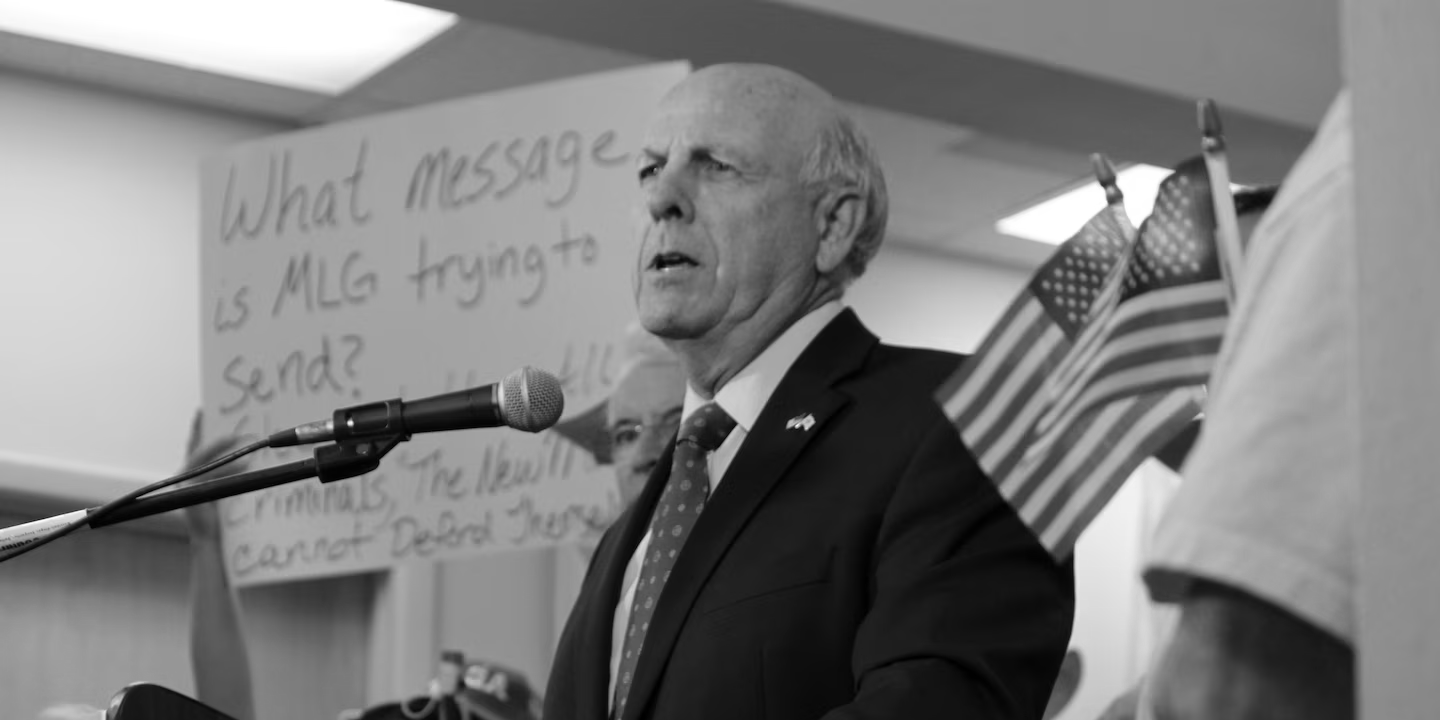
    Former New Mexico Republican chairman Steve Pearce is the opposite of what the complex agency needs.

    Originally published at washingtonpost.com on November 18, 2025.

    There was a time when Republicans prided themselves on being the party that can actually run things. In the West, this was reflected in sound GOP stewardship of public lands that blended enterprise with environmental respect, a tradition exemplified by Theodore Roosevelt’s conservation ethic and Ronald Reagan’s pragmatic federalism.

    Don’t expect a new chapter in that storied tradition if Stevan Pearce, President Donald Trump’s nominee to head the Bureau of Land Management, is confirmed.

    The Bureau of Land Management oversees a vast portfolio of 245 million acres of public land and nearly 700 million acres of mineral rights, regulating uses such as grazing, energy production and recreation that often conflict. The job of BLM director demands competence, credibility and balance.

    Pearce is a former U.S. congressman from New Mexico who chaired the New Mexico Republican Party for six years, experience that, in theory, should qualify him for this vital position. In practice, Pearce’s record does the opposite.

    I am conservative and I live in New Mexico. I believe in the old Republican virtues: limited government, personal responsibility, fiscal discipline and competent leadership. But I left the Republican Party because, after Pearce took control, those values gave way to something else entirely: bitterness, infighting and ineptitude.

    A state party chair has two jobs: raise money and win elections. Under Pearce’s leadership, New Mexico Republicans did neither. Over his six years, Pearce alienated moderates, purged reformers and lost credibility with donors.

    The result has been irrelevance. During Pearce’s time as state chairman and continuing today, Republicans have languished as a superminority in both chambers of the state legislature. Democrats in New Mexico hold a 26 to 15 Senate majority and a 44 to 26 advantage in the House. Once-competitive districts now elect Democrats by double digits. Pearce’s own congressional district — once a conservative stronghold in the southern half of the state — has flipped. Oil and gas producers, long the GOP’s core constituency, abandoned ship. Under Pearce, energy companies began donating more to Democrats — not because their principles changed, but because Republicans lost so much power and purpose. When the backbone of New Mexico’s economy decides the state GOP is immaterial, something has gone deeply wrong.

    Worse, Pearce’s tenure within the GOP itself was defined by factional warfare, not leadership. The feud between the camp of Gov. Susana Martinez and the one surrounding Pearce tore the party apart. While Martinez worked to broaden the Republican base, Pearce doubled down on grievance politics and purity tests. The result was predictable: The GOP lost statewide races and credibility.

    This approach will not work at the Bureau of Land Management. The agency has responsibilities managing oil leases, mineral royalties, grazing permits and wilderness areas, and it must balance the interests of ranchers, tribal nations, environmentalists and energy producers. That takes diplomacy and competence. Pearce, however, has spent his career alienating the very stakeholders he would be required to work with. In Congress, he voted against environmental protections, dismissed climate science and pushed to expand drilling in sensitive areas such as Otero Mesa.

    Trump’s first term showed that personnel choices can define presidencies. His best choices, like Mike Pompeo at the CIA and then the State Department, paired ideological conviction with administrative skill. His worst ones elevated loyalists and showmen over professionals. The Bureau of Land Management, already battered by political turnover, cannot afford another leadership crisis. After Kathleen Sgamma withdrew from consideration earlier this year, the president could have selected a capable Westerner with bipartisan credibility. Instead, he chose a man whose chief qualification appears to be an unbroken record of losing.

    So it’s not just environmentalists who should object to Pearce’s nomination. Conservatives who care about competence should, too. Every time a Republican appoints an unqualified partisan to a critical post, it reinforces the caricature that the right doesn’t take governing seriously.

    The Bureau of Land Management requires a leader who understands the economic and ecological stakes of the job and who can build trust among the diverse communities of the American West. But in Stevan Pearce, President Trump has turned to the worst kind of insider. The Bureau of Land Management, and the millions of Americans who depend on it, deserve better.

    Originally published at washingtonpost.com on November 18, 2025.

  • The Case Against 30-Year Mortgages

    The Case Against 30-Year Mortgages

    Subsidized debt drives up prices, sucks up wealth, and makes it hard for millennials to buy homes.

    Originally published at wsj.com on October 8, 2025.

    I usually roll my eyes at millennials’ complaints about how much harder they have it than their parents. But when it comes to homeownership, they have a point. Millennials reached the 50% homeownership milestone later than any previous generation, burdened by record-high housing costs, elevated mortgage rates, and struggles with down payments. Nearly a quarter say they expect to rent forever.

    But the obstacle is more than prices or supply: It’s an insidious financial instrument so predatory and deceptive that it has warped the housing market for nearly a century. Ladies and gentlemen, I present the 30-year mortgage.

    The mortgage is less a product of market choice and more one of central planning. Created by Depression-era reforms, subsidized through the Federal Housing Administration, the Department of Veterans Affairs, Fannie Mae and Freddie Mac, the modern mortgage represents Washington’s promise of a home for every American.

    The mortgage industry comprises $12.94 trillion tied to more than 80 million active loan contracts, with roughly 70% of mortgages backed by the federal government. Like every centrally planned system, the mortgage distorts markets, inflates prices, and serves institutions rather than individuals.

    Before the mortgage, most home buyers purchased with cash or risky balloon loans—which have a short duration and end with one large payment of the loan’s balance. So in the 1930s the federal government introduced long-term, fully amortized loans through the Home Owners’ Loan Corp. and the FHA. These were sold as relief from balloon loans and a way to democratize housing access. But the change came at a steep price: The 30-year mortgage locked families into a lifetime of interest payments that cost the borrower far more than the original price.

    Today someone who buys a $400,000 property at 6% interest effectively pays for the home almost twice. By the end of the loan, a family can expect to pay more than $690,000 in principal and interest, assuming a 20% down payment. The problem isn’t interest rates or housing costs—it’s the loan itself. Lower down payments make entry to the market easier, but the borrower pays dearly for that privilege. An FHA loan on that same house with its minimum down payment of only 3.5% means the borrower eventually shells out $833,000. Inflation may erode some of the burden but can’t keep up with the scale of interest charges.

    As this model grew across the 20th century, it dramatically raised base housing prices relative to income. Postwar programs such as the GI Bill turbocharged the mortgage model. Easy credit powered an artificial demand boom, which, over time, inflated home prices. When buyers had to pay cash, sellers were constrained by what households could actually afford. But when banks are dangling decades of borrowed money, buyers bid higher, sellers raise prices, and lenders pocket the spread.

    In response to higher prices, lenders gradually extended terms, lowered down payments, and created complex loan structures to keep the carousel spinning. By the 1970s, Fannie Mae and Freddie Mac had institutionalized securitization, creating a secondary market hungry for mortgage debt.

    In the 2000s the game was in full swing: subprime, adjustable-rate, interest-only and no-money-down loans flooded the market. The 2008-09 panic and recession exposed the consequences. Millions lost their homes, yet the financial instrument that led to this catastrophe survived untouched.

    Which leaves millennials struggling to afford a home of any kind. Gone are the 1970s, when an average home could be secured for about $26,300 against an annual household income of $9,870. Today’s latest data shows that the annual household income is $83,730 and the average home costs $410,800.

    Most home buyers don’t notice how they’re mistreated because of a sleight of hand with loans’ disclosures. In 1968 Congress passed the Truth in Lending Act, which it advertised as a victory for transparency. In practice, the law entrenched a regulatory framework that lets lenders use a deceptive measure to cover up a loan’s real cost: the annual percentage rate, or APR.

    The law mandated that lenders disclose a loan’s APR. But it isn’t actually a rate; it’s a function of a rate over time. It’s like the difference between acceleration and speed in physics. Just as it makes no sense to tell drivers the speed limit in terms of acceleration, it’s duplicitous to explain a loan in terms of APR. While a 5% APR may sound benign—it’s lower than the APR for a car loan or a credit card—the comparison is meaningless because it doesn’t account for time. A car loan lasts five years, and a credit card can be paid off at will, meaning the interest has little time to compound. Lenders do also have to disclose the total cost of a house—interest and all—but they have every reason to emphasize the APR. The amortization schedule for my last home purchase was buried on page 71 of the closing documents, while the interest rate was boldly emblazoned on page 1.

    Todd Zywicki, in his work on mortgage law and economics, notes that APR hides the cumulative cost and distorts borrower behavior. Families anchor on the “rate” without understanding how compound interest quietly siphons away their wealth. This further inflates prices.

    We’ve seen this dynamic before. In higher education, government-backed loans artificially inflated tuition, saddling students with generational debt. The mechanism is the same with housing: Subsidized credit raises prices.

    The mortgage isn’t the foundation of the American Dream. It’s the scam of the century: a loan so exploitative it required a federal law to disguise its true nature. For generations, lenders, regulators and politicians have normalized a system that drains family wealth under the guise of opportunity. Until Americans demand honesty, the scam will continue—and homeownership will remain a dream sold on indebted servitude.

    Originally published at wsj.com on October 8, 2025.